Due diligence is where good investment decisions are made or undone. In 2026, rising holding costs, tighter lending conditions, and uneven market performance mean buyers need far more than surface-level checks or generic advice. For investors who want to protect their capital before it's deployed, this level of rigour is now non-negotiable.
If you're someone who prefers to move carefully and thoroughly, who wants to understand every risk before committing, this guide walks you through the critical steps before exchanging contracts. If you're building a portfolio methodically and need each acquisition to work reliably, strong due diligence is what creates that reliability.
This guide to due diligence for investment property 2026 helps you assess risk, validate assumptions, and protect your capital before contracts are signed. The process is straightforward, but it is detailed, and that detail is exactly what separates defensive investors from those who encounter surprises after settlement, when options are limited and leverage makes mistakes expensive.
Due diligence is far more than a single inspection or checklist item. For investors, it is the comprehensive process of confirming that a property makes sense financially, structurally, and strategically, and that it will behave as you've predicted, even under stress.
Effective due diligence answers three core questions:
Skipping steps often leads to surprises after settlement, when leverage and timelines leave little room to correct mistakes. And in 2026, when margins are tighter than they've been, surprises can be very expensive.
For cautious investors, due diligence is your primary defence against overpaying or acquiring a property with hidden liabilities. For those building strategically, thorough due diligence ensures each property works independently, so each asset carries its own weight instead of relying on the market to bail it out.
Before reviewing the property itself, buyers must validate the location fundamentals. This is where most risk actually lives: less in the property itself, and more in whether tenants will want it.
This foundational work includes:
A property can be beautifully built but still underperform if tenant demand is weak, seasonal, or dependent on temporary conditions. This is where many cautious investors make their first smart decision: rejecting locations that look appealing but lack genuine tenant demand fundamentals.
Rely on data rather than instinct or what a real estate agent tells you. Look at:
For capital protectors, this step determines whether you acquire at all. A location with weak fundamentals rarely justifies “the right price”, because eventually, that weakness will hurt resale. For strategic builders, location validation ensures your foundation is solid. You want each property to be a reliable, lower-maintenance asset so you can focus capital and energy on the next acquisition.
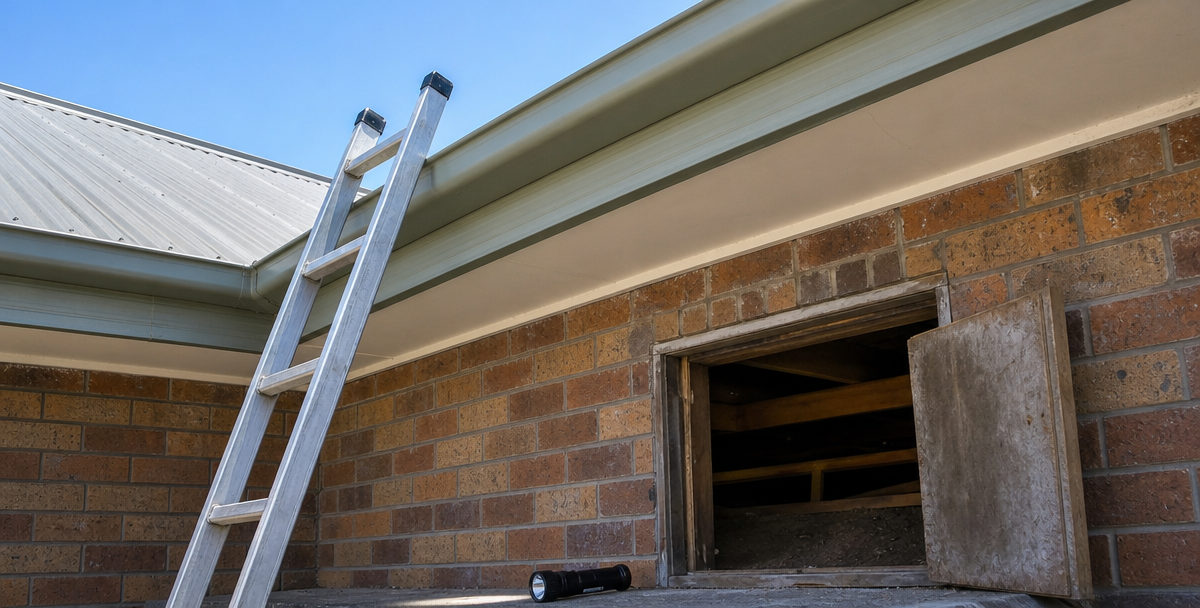
A professional building and pest inspection is non-negotiable for investment property buyers in 2026, even for newer properties.
Key structural issues to review with your inspector include:
What matters most is looking beyond what's broken today, to future repair and maintenance costs and how these affect holding expenses long-term.
A good inspection report prioritises defects rather than simply listing them. Major structural issues fall into “price the fix before you buy” territory; minor maintenance falls into “budget for this over time.” Understanding which category each issue falls into is essential.
Ask your inspector:
For cautious investors, a thorough inspection is where you either confirm your confidence or walk away. If major issues exist, you'll know the cost upfront, and you can decide if the property's yield or growth potential justifies bearing that cost. For strategic accumulators, inspection clarity prevents nasty surprises that drain cash flow. You want to know maintenance costs accurately so they stay within your serviceability assumptions.
A rental appraisal should be treated as a validation tool rather than a promise or a ceiling.
Buyers should:
In 2026, conservative cash flow assumptions often outperform optimistic projections. This is the year to be ruthlessly conservative.
Build a simple spreadsheet with three scenarios: best case, realistic case, and stress case.
Can you service the loan in the stress case? A yes means you've found your margin of safety; anything short of that means the property carries more risk than you should accept.
For capital protectors, this stress-testing is where you protect yourself from overpaying. Properties that only work in “best case” scenarios are inherently risky. For portfolio builders, realistic stress-testing ensures each property can function independently if market conditions change. Realistic stress-testing means planning for normal, real-world conditions rather than counting on everything going perfectly.
Contract terms can significantly affect your risk, timelines, and exit options. Many investors gloss over this, treating contracts as “just the legal stuff”, but contracts are where you actually protect yourself.
Ensure your conveyancer or solicitor reviews:
This step protects you from committing before due diligence is complete. It also protects you from discovering post-settlement that the property is restricted from renting due to zoning, or that the title has complications.
For cautious investors, legal clarity is essential. A cheap property with title complications is a liability rather than a bargain. For strategic builders, contract clarity means you commit only once every fundamental is confirmed.
Due diligence must account for real holding costs as much as purchase price. This is where many investors fail to plan defensively.
Real holding costs include:
Buyers who only assess best-case scenarios, assuming zero vacancy, minimal maintenance, stable rates, often encounter pressure when conditions inevitably change.
Create a realistic annual cost forecast:
Total that up. Subtract from projected rent. What's left is your actual cash flow. If it's tight, this property carries serviceability risk.
For capital protectors, realistic holding cost forecasts are where you confirm affordability. You're buying a property that works with margin for error, rather than one you can barely service. For strategic accumulators, accurate holding costs ensure your portfolio strategy is sound. If each property requires active cash injection rather than generating modest surplus, the strategy is relying on equity from one asset to subsidise another instead of actually working.
Every investment purchase should include an exit lens. This is what separates investors from accidental landlords.
Buyers should consider:
Liquidity matters, especially in slower or selective markets. A property that's difficult to exit becomes a forced hold, which limits your flexibility.
Before settling, imagine it's five years later and you need to sell. Ask yourself:
A purchase without a clear path to exit deserves a rethink. Illiquidity is a hidden cost.
For cautious investors, exit clarity keeps you free to move in a declining market instead of trapped in it. You're buying properties that have natural demand beyond just the investor market. For strategic builders, broad exit appeal means you can sell when it makes strategic sense, to rebalance, to take profits, or to redeploy capital into better opportunities.
Absolutely yes. When you're buying your own home, personal preference matters, since you'll live with the decision. As an investor, you must prioritise cash flow, tenant demand, and resale liquidity ahead of personal preferences. This requires a different mindset and different questions. A property you'd love to live in might perform poorly as a rental, while a property with strong cash flow might hold little personal appeal. Learn to separate the two.
Online data, including ABS statistics, suburb research, and rental listings, provides useful context, but inspections, local insight, and contract review remain essential on top of it. Online data might tell you a suburb is growing; local insight tells you where in the suburb to buy and where to avoid. Online rent comparisons might suggest $400 a week is achievable; local knowledge tells you which properties actually achieve it. The groundwork is what turns data into a sound decision.
Skipping due diligence may secure a property faster, but it significantly increases downside risk after purchase. In competitive markets, missing one opportunity simply means waiting for the next, since other properties will come. The cost of missing due diligence steps is almost always higher than the cost of missing one property.
Across Victoria and Tasmania, many investment buyers are navigating competitive conditions while balancing affordability constraints. Properties that look strong online may still carry hidden risks that only surface through thorough checks.
The difference between experienced and inexperienced investors: experienced investors slow down the decision, even when competition is high, because the cost of missing issues post-settlement often outweighs the cost of waiting for the next opportunity.
In tight markets, this discipline is even more valuable. It keeps you from overpaying for properties with hidden issues or weak fundamentals. And it ensures every dollar you deploy works hard for you.
Strong due diligence for investment property in 2026 comes down to discipline and systematic verification rather than complexity. By methodically reviewing location demand, inspections, rental assumptions, legal terms, holding costs, and exit options, you reduce risk and improve long-term outcomes materially.
In a more selective market, thorough due diligence is essential rather than optional. It's one of the most effective tools you have to protect both cash flow and capital, and it's what allows you to move confidently when you do find a good property, because you know you've checked everything and the numbers work.
More importantly, strong due diligence protects you from the largest source of investment losses: overpaying or acquiring properties with hidden liabilities that drain cash flow for years. Spend the time upfront. It always pays back.
XAGENT specialises in helping investors navigate due diligence systematically, working with cautious, strategic buyers who want to understand every aspect of a property before committing. From location validation to inspection interpretation to cash flow stress-testing, real clarity before settlement is what turns a good opportunity into a confident acquisition.

TWO WAYS IN

A 90-minute session with a senior advisor. A written diagnostic within 48 hours. You'll walk away knowing exactly where you stand today, where you're heading, and the moves required to bridge the gap.
Book The Clarity Brief™$990 · 90 minutes · diagnostic in 48hrs

A 5 minute diagnostic that reveals your archetype, your strengths and blind spots, and the wealth engine pattern most likely to work for you.
Discover your archetypeFree · 5 minutes · instant results
