
Launceston can be a good place to invest in 2026 for buyers who prioritise rental income, manageable entry prices, and a market supported by practical demand rather than hype. It tends to suit investors who want a regional city that can contribute cash flow and portfolio stability, provided suburb selection and property choice are handled with discipline.
The more useful question is not whether Launceston is universally “good.” It is whether Launceston fits the role your next property needs to play. For some investors, that role is stronger income and lower holding pressure. For others, the same market may feel too moderate if the main objective is aggressive short-term capital growth.
Launceston functions as one of Tasmania’s key regional service centres, supported by healthcare, education, government services, logistics, and transport-linked employment. Those fundamentals matter because rental markets anchored to essential services are often more resilient than markets driven mainly by trend-based demand or short-lived lifestyle attention.
That does not mean every part of Launceston performs the same way. It means the city has structural demand drivers that can support a rental-led strategy when suburb selection is done carefully and the asset is matched to the right tenant profile.
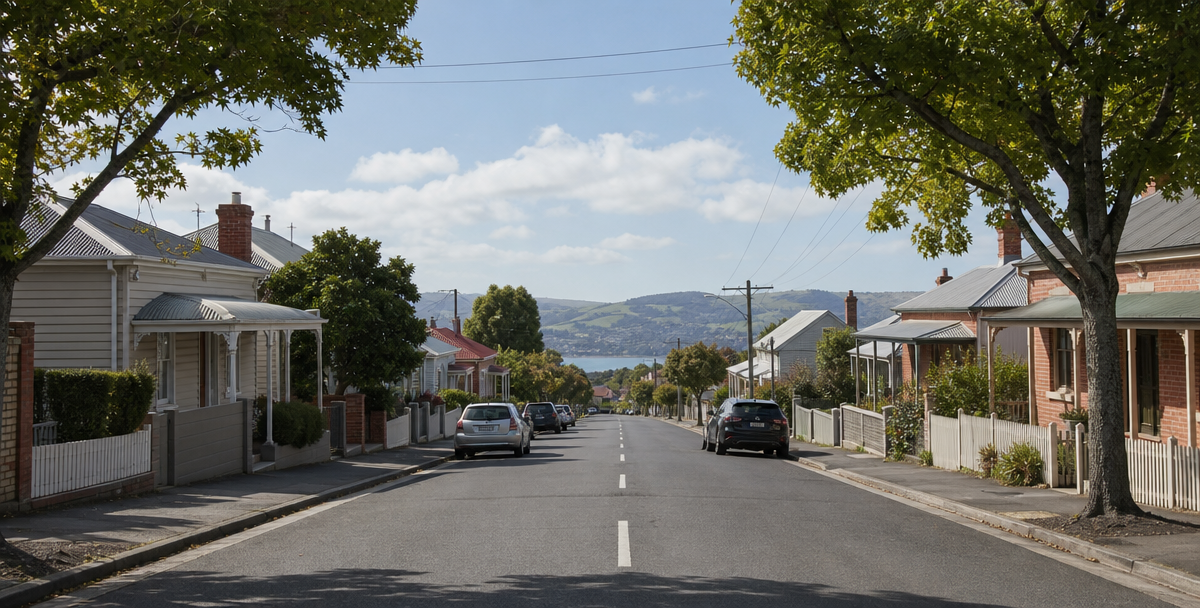
Rental yield is part of the reason Launceston keeps attracting investor attention. Commentary places gross yields broadly in the 4 to 7 percent range depending on suburb and property type, with some sources putting the citywide market closer to the mid-4 percent range while specific pockets perform higher.
Vacancy conditions have also remained tight, with estimates around or below the 1 to 1.5 percent range. That points to a rental market where tenant demand has remained strong. Yield only becomes meaningful when the rent is durable, the vacancy assumption is realistic, and the property can hold up under more conservative conditions.
Launceston can provide moderate growth and stronger income than many larger mainland markets, although it is not a market that should automatically be treated as a rapid equity story.
Some data points show stronger recent annual growth numbers, while other commentary describes the market as having already moved through a significant earlier growth cycle and now entering a more measured phase. That supports a balanced reading: Launceston may still offer growth, but the stronger and more consistent case in 2026 is its ability to contribute serviceable income and reduce portfolio holding pressure.
No market is risk free, and Launceston needs to be assessed with the same discipline as any mainland city. The main risks are its smaller market size, narrower buyer pools, suburb-level fragmentation, and the possibility of overpaying in a market where the best-value part of the previous cycle may already have passed.
Attractive yield should never be treated as a shortcut for low risk. A strong-looking return on paper can still sit on top of weak housing stock, shallow buyer depth, or a pocket with inconsistent resale demand. In Launceston, the difference between suburbs and even individual streets can materially change both tenant performance and exit flexibility.

If Launceston is being considered seriously in 2026, three checks matter more than headline commentary.
If the property is being bought for income, the rent should be modelled conservatively. That means including management fees, insurance, council rates, maintenance, and a vacancy allowance, then testing the deal at a higher interest rate than today. A property that still feels manageable under pressure is far more useful than one that only works in ideal conditions.
Launceston is not one uniform market. A better decision comes from understanding why tenants rent in a specific pocket and whether that demand is linked to long-term practicality such as employment access, proximity to hospitals and schools, transport links, and established residential appeal.
Even when income is the main priority, the property still needs to work later. Layout, condition, street quality, proximity to services, and owner-occupier appeal all shape refinancing options, valuation support, and resale liquidity. An asset that is easy to rent and desirable to future buyers protects the investor’s flexibility across the broader portfolio.

Launceston can work well when the role of the property is clear. A well-selected asset there can provide relatively affordable entry, useful rental income, and a stabilising function inside a portfolio that may otherwise lean too heavily on higher-growth, lower-yield markets.
This is where Launceston often makes the most sense. It is not a market that needs to be sold as dramatic or perfect. It can simply be useful. For investors who want income support, lower holding pressure, and a regional city with practical fundamentals, that can be enough.
If stable rental income is a priority in 2026, Launceston deserves structured consideration. Its appeal comes less from hype and more from function: relatively tight vacancy, serviceable yields, practical affordability, and an economy supported by essential-service demand.
The stronger decision is not built on yield alone. It comes from stress-testing the rent, confirming suburb-level demand, and selecting an asset that protects both cash flow and future flexibility. When those elements align, Launceston can play a useful role in a long-term property strategy.

TWO WAYS IN

A 90-minute session with a senior advisor. A written diagnostic within 48 hours. You'll walk away knowing exactly where you stand today, where you're heading, and the moves required to bridge the gap.
Book The Clarity Brief™$990 · 90 minutes · diagnostic in 48hrs

A 5 minute diagnostic that reveals your archetype, your strengths and blind spots, and the wealth engine pattern most likely to work for you.
Discover your archetypeFree · 5 minutes · instant results
